
From strategy to shipped, with AI agents and human accountability.
For technology vendors and growing companies that need to decide what to build, and then ship it.
- Quality and compliance gates defined and automated
- 8 repositories assessed end to end
- Author, Flow Architectures (O'Reilly)
- $11M+ first-year platform revenue
About Me
With over three decades of experience leading technology innovation at startups and enterprises, I help technology vendors and growing companies turn strategy into software that ships. I'm the author of Flow Architectures: The Future of Streaming and Event-Driven Integration (O'Reilly, 2021), former Principal Technologist for VMware's Tanzu Application Platform, and most recently Field CTO at Kamiwaza, an enterprise AI platform company.
Today I work the whole arc: framing the strategic question, assessing what is actually in the code, and doing the implementation alongside your team. AI agents do much of the building. My job is the judgment, the verification and the accountability for what reaches production.
What I Deliver
- Strategic Modeling & Analysis: Wardley Mapping, EventStorming and Promise Theory to understand your landscape, find the opportunities and make decisions you can defend.
- Product & Go-to-Market Strategy: Developer-focused products positioned to solve real problems and reach technical decision-makers, from someone who has led platforms to $11M+ in first-year revenue and run global technical sales teams.
- Evidence-Based Assessments: AI-assisted reviews of your code, infrastructure, pipelines and APIs, with every finding traced to source and turned into a staged roadmap leadership can fund.
- AI Factory Development: The delivery platform, verification gates and automated SRE and security services that let AI agents build safely at speed.
- AI-Driven Implementation: Applications designed, built, tested and deployed with AI coding agents, with people accountable for what ships.
- Fractional Technical Leadership: Senior technical judgment for teams too small to have it in-house, including independent review when you only have one engineer.
Why Work With Me
Strategy is cheap when it never meets the codebase. I read your repositories before I write recommendations, I say what I verified and what I inferred, and I stay to implement what I recommend. When the evidence changes, so does my advice, even when it means reversing my own earlier recommendation.
My career spans the evolution of distributed systems, from traditional enterprise architectures to event-driven platforms and now agentic AI. I was recognized as one of the ten most influential people in cloud computing by MIT Technology Review, and I bring the same habit of working at the frontier to how software gets built today.
How I Work
Generating code is now cheap. Proving it is correct, knowing what shipped, and having a rehearsed way back are not. Every engagement follows the same arc, sized to your team.
- 1
Frame. Align the business question, the constraints and what success looks like, using Wardley Mapping and EventStorming where they help.
- 2
Survey. A read-only, AI-assisted review of your repositories, pipelines and configuration. Every finding is tagged as verified, inferred or unknown, and traced to a file and line.
- 3
Plan. A staged roadmap with an exit gate for each stage, effort estimates and owners by task, written for executives and engineers alike.
- 4
Ship. Implemented with your engineers, plan first. We define each outcome; agents draft a plan we verify, then develop and test against it; we validate and approve, and automation deploys. Every production change has a tested rollback before it starts.
- 5
Hand over. Usable runbooks, a status note against the plan (including outstanding work items), and a prioritized backlog your team owns.
The plan comes first. Agents propose; a person approves the plan before any code is written.
Verification beats generation. Checks the author, human or agent, cannot waive.
The code is the source of truth. Where documentation and code disagree, I report what the code does.
Sized to your team. Plans that fit your existing staff, not the team you wish you had.
Nothing irreversible without a way back. Rollback is rehearsed before cutover, not after.
Strategy Through Delivery
Decide
Product Strategy & Roadmap Development
Transform your developer-focused product vision into market reality. This service helps technology vendors define, refine, and execute product strategies that resonate with modern software teams.
Go-to-Market Acceleration Program
Bridge the gap between your technical capabilities and market success. This program helps you articulate your value proposition and reach decision-makers effectively.
Diagnose
Technical Assessments & Modernization Roadmaps
Find out what's really in your systems, in days, and get a staged plan to fix and modernize it.
Deliver
AI Factory Development
Build the delivery platform, guardrails and automated SRE and security that make agent-written code safe to ship.
AI-Driven Implementation
Design, build, test and deploy your application with AI agents and people accountable for the result.
Fractional Technical Leadership
Senior technical judgment for teams too small to have it in-house.
Services in Detail
Product Strategy & Roadmap Development
Transform your developer-focused product vision into market reality. This service helps technology vendors define, refine, and execute product strategies that resonate with modern software teams.
What you get:
- Strategic analysis using Wardley Mapping to identify market positioning and evolution
- Collaborative EventStorming sessions to align business goals with technical capabilities
- Promise Theory modeling to understand and optimize system behaviors
- Comprehensive market analysis and positioning strategy
- Developer experience (DevEx) optimization recommendations
- Architectural guidance, especially for event-driven and cloud-native approaches
- Prioritized feature roadmap aligned with market demands
- Metrics framework for measuring developer adoption and success
- AI and agentic product strategy, informed by building and selling enterprise AI platforms
Using proven methodologies and having led platforms generating $11M+ in first-year revenue, I help you identify and capitalize on market opportunities while solving real developer pain points.

Go-to-Market Acceleration Program
Bridge the gap between your technical capabilities and market success. This program helps you articulate your value proposition and reach decision-makers effectively.
What you get:
- Wardley Mapping workshops to visualize and communicate your strategic positioning
- Technical marketing strategy and content development
- Sales enablement tools and training for technical products
- Executive engagement playbook for enterprise sales
- Custom workshops and presentation materials
- Metrics-driven approach to marketing qualified leads (MQLs)
- Demos and technical content built with the same AI tooling your buyers are adopting
Drawing from experience leading global technical sales teams and using strategic modeling techniques, I help you craft compelling narratives that resonate with developers, architects, and technical executives.
Technical Assessments & Modernization Roadmaps
Find out what's really in your systems, in days, not months. I run read-only, AI-assisted assessments of your code, infrastructure, pipelines and APIs, then turn the findings into a staged roadmap that leadership can fund and engineers can execute.
What you get:
- Security assessment measured against the obligations you actually carry (for example GLBA, PCI DSS or state health-privacy law), with every finding traced to source and rated
- DevOps and delivery assessment: how each deliverable ships, who can ship it, what verifies it and how you would roll it back
- Integration and API review: what your documentation promises compared with what your code does
- A staged roadmap with exit gates, effort estimates and owners by task
- An executive summary plus engineer-ready companion reports with file and line references
- Event-driven and cloud-native modernization strategy using EventStorming, Wardley Mapping and Promise Theory
- Reusable assessment prompts, so you can rerun the review each quarter and see what changed
At Onfire Health, three assessments across eight repositories took two days and produced a security roadmap that closes every critical gap in about two weeks of engineering time, most of it at little or no cost.

AI Factory Development
Build the factory before you scale the output. When AI agents write much of your code, the bottleneck moves to proving it is correct, knowing what shipped and getting back fast. I build the delivery platform, guardrails, and automated SRE and security services that make agent-written code safe to ship.
What you get:
- Cloud foundations: a multi-account landing zone, infrastructure as code, and CI that reaches the cloud with short-lived credentials instead of stored keys
- Continuous delivery: each release built once and promoted unchanged through dev, staging and production, with promotion and rollback gates that actually enforce
- Verification the author, human or agent, cannot waive: tests, linting, secret and dependency scanning, and AI-assisted security review on every pull request
- A managed agent harness: agent rules with risk tiers, contained credentials, and a record of which person directed each agent change
- Automated SRE: alerts that reach a named person, partner-impact monitoring, restore tests, reliability targets and rehearsed rollback
- Automated security services: cloud posture checks, payment-page integrity monitoring, audit logging and scheduled AI reassessment
- Production cutovers with a rehearsal, a written runbook and a tested rollback path in place before the first step
Onfire Health's production platform moved onto a new multi-account AWS foundation and build-once delivery pipeline in a single cutover, without incident.

AI-Driven Implementation
From idea to running application. I design, plan, build, test and deploy software with your team, using AI coding agents to build and a disciplined process to keep the result correct, secure and maintainable.
What you get:
- Product and technical design: requirements, domain model (EventStorming where it helps), architecture and API contracts
- Plan-based delivery: each increment starts from an agent-drafted plan you approve, with acceptance criteria written as tests
- Application code built with AI coding agents, reviewed and owned by people
- Automated tests at every layer, including contract tests for partner-facing APIs
- Deployment through your pipeline, or one built under AI Factory Development
- Documentation that matches the code, and a handover your team can maintain

Fractional Technical Leadership
Senior technical judgment for teams too small to have it in-house. Built for companies with one to a few engineers, where every decision about architecture, security and delivery lands on the same people.
What you get:
- A standing partner for the CEO and lead engineer on architecture, build-versus-buy and sequencing
- Independent review of high-risk changes (infrastructure, payments, partner-facing work) when there is no second engineer to provide it
- Ownership of the technical roadmap, translated for boards, investors and partners
- Security program basics: the written program, incident plan and answers to partner security questionnaires
- Governance of your AI coding agents: how they are configured, constrained and measured
- Hiring guidance: when to add the next engineer and what that person should own
At Onfire Health, the most important recommendation was not a tool. It was how to get independent review of every production change with one engineer on staff.

Selected Work
Onfire Health: from manual deploys to a gated, AI-assisted delivery platform
Onfire Health runs payment memberships for health and wellness practices, built on Square, Plaid and Bill.com, with a lean engineering team and AI agents writing a large share of the code. Deployments were manual and inconsistent, enough to put the business at risk, and partners were already building on Onfire's API.
What I did
- Planned the conversion. A process analysis and continuous-delivery plan, plus recommendations for stable infrastructure to run Onfire's AI agents.
- Built it with the team. A ten-stage implementation: a multi-account AWS landing zone, a build gated on the full test suite, a production-grade environment module, promotion and rollback that enforce key policy and quality gates, then dev, staging and production in turn.
- Assessed the whole platform. AI-assisted, read-only reviews of security, DevOps maturity and the partner integration surface across eight repositories, each delivered as an executive report with engineer-ready detail.
- Merged it into one plan. Staged roadmaps with exit gates, sized for a single engineer, with the decisions only leadership could make called out.
Results
- Production moved onto the new platform in a single cutover, without incident.
- Every release is now built once and promoted unchanged from dev to production, with a scripted rollback that needs no rebuild.
- CI reaches AWS through short-lived credentials, with no stored cloud keys.
- A security roadmap that closes every critical gap in about two weeks of engineering, mostly at little or no cost, and a path to the lightest PCI questionnaire.
- A partner-integration plan that puts self-service ahead of new surface area, and drops a feature I had recommended earlier once the evidence showed it would spread bad data faster.
How the AI was used
All of the work was planned, tracked and verified with AI, in partnership with Onfire. Assessments ran with AI coding agents alongside open-source scanners (gitleaks, semgrep, bandit, pip-audit). Every route was traced end to end, and every critical and high finding was re-checked against the source by hand. Implementation used AI coding agents behind the same gates the plan required of Onfire's own team.
Methods
Plan-Based AI Development
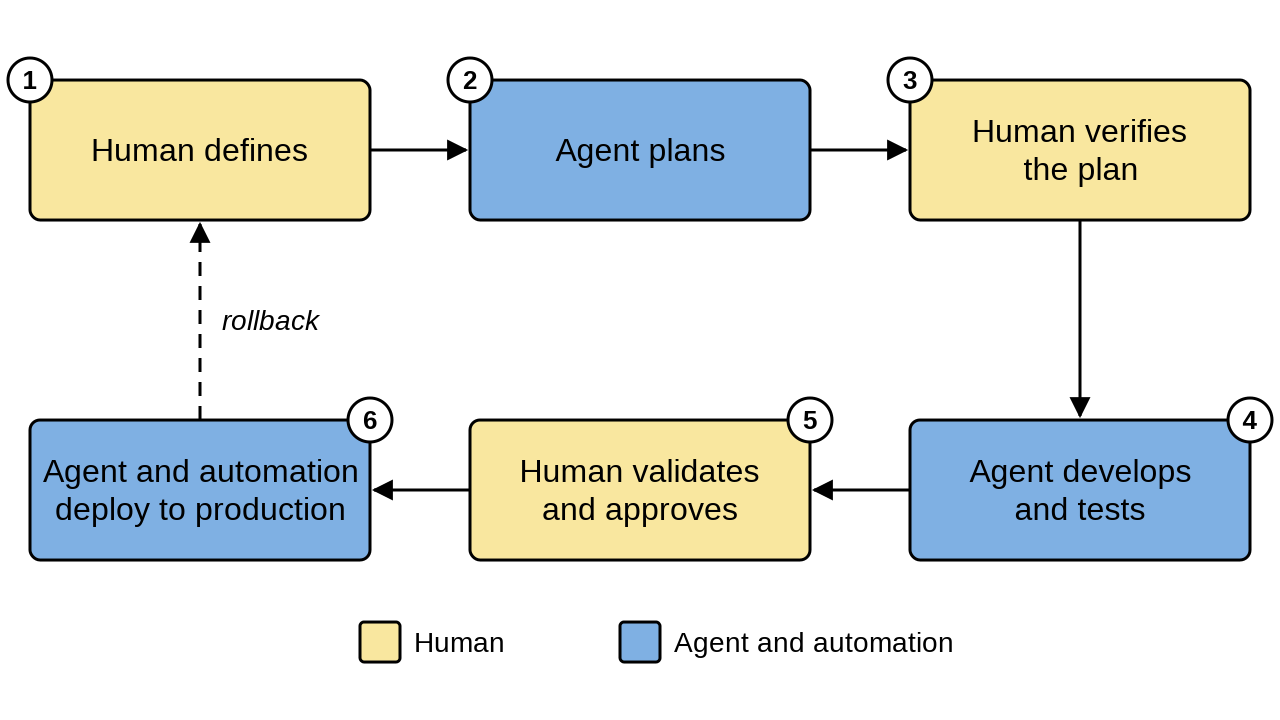
Plan-based AI development puts a written, human-approved plan between every intent and every line of code. A person defines the outcome and its constraints. An agent proposes a plan: the changes, the tests that will prove them and the risks. A person verifies that plan before any code is written. The agent then develops and tests against it, a person validates the result and approves it, and agents and automation deploy it to production through gates no one can skip. Agents do the volume of work; people own intent, plans and approval. The result is speed with evidence: every change traces back to a plan someone approved, releases can be reproduced, and there is always a rehearsed path back.
- 1Human defines the outcome, constraints and acceptance criteria.
- 2Agent plans the changes, tests and risks.
- 3Human verifies the plan before any code is written.
- 4Agent develops and tests against the approved plan.
- 5Human validates and approves the result.
- 6Agent and automation deploy to production through enforced gates, with rollback ready.
EventStorming
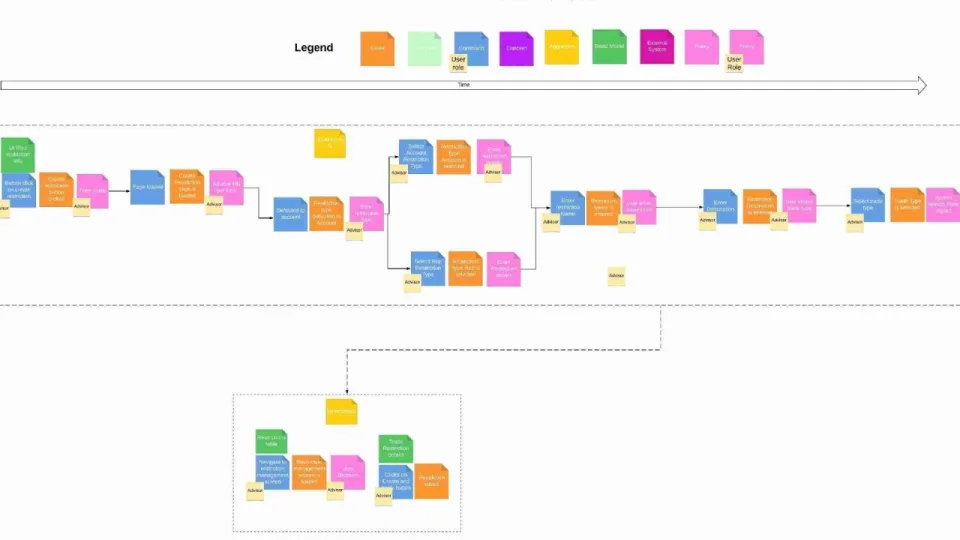
EventStorming is a flexible workshop format for collaborative exploration of complex business domains. It brings together software developers, product owners, and domain experts to create a shared understanding of business processes and system behaviors. Through the use of colored sticky notes representing different types of domain events, commands, and policies, EventStorming helps teams identify bounded contexts, aggregate roots, and potential microservice boundaries in your software architecture.
Wardley Mapping
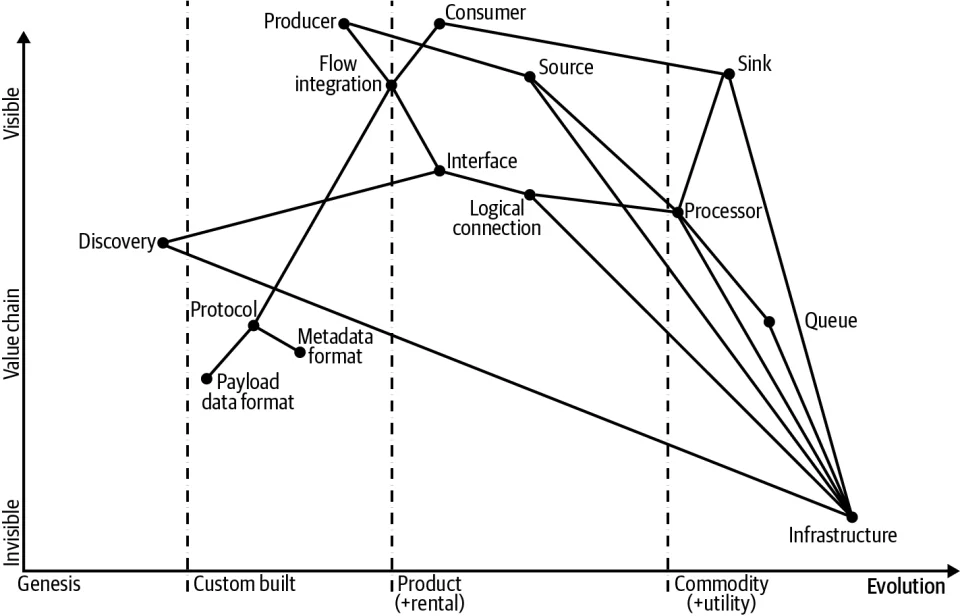
Wardley Mapping is a strategic planning technique that helps organizations understand their technology landscape and make informed decisions about their evolution. By mapping components of your business and technology stack along axes of visibility and evolution, Wardley Maps reveal dependencies, opportunities for innovation, and potential areas of technical debt. This methodology enables leaders to anticipate market changes, identify strategic patterns, and make more effective decisions about technology investments and architectural choices.
Promise Theory
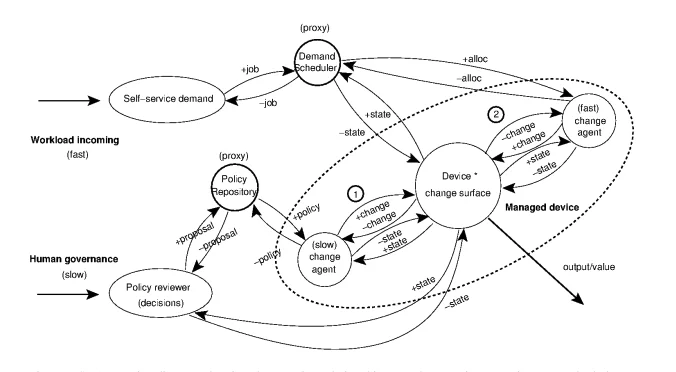
Promise Theory is a model for understanding and analyzing complex systems through the lens of voluntary cooperation between autonomous agents. Developed by Mark Burgess, it provides a framework for reasoning about system behaviors, scalability, and reliability. By modeling system components as agents that make and keep promises, Promise Theory helps architects and developers design more resilient distributed systems, understand potential failure modes, and create more effective automation strategies. It's particularly valuable in cloud-native and microservices architectures where understanding system dynamics is crucial.
Contact Me
Whether you need a strategy, an honest look at your systems, or someone to help ship the fix, let's talk.